The United Nations General Assembly is, in practice, one of the most powerful men’s networks in the world. Each September, when Heads of State and Government convene in New York for the General Assembly’s High-Level Week, roughly nine in ten of them are men. For more than a decade, WPL has worked to make sure that the perspectives of women political leaders matter in that room and are heard.
WPL is at UNGA because no other week concentrates so much decision-making power in one place. Heads of State and Government, ministers, UN leadership and a wide circle of multilateral institutions and civil society partners are all in the same city at the same time. For an organisation whose mission is to increase both the number and the influence of women in political leadership, that concentration is leverage: a single week of convening builds relationships and partnerships. WPL collaborates for example with the Office or the UN Deputy Secretary-General, the UN Office of Partnerships, the International Telecommunication Union, UN Women and a range of UN member states.
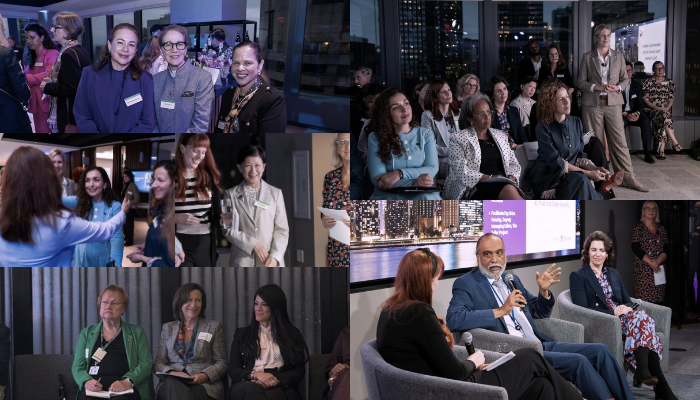
WPL’s engagement at UNGA has always spanned the full range of policy areas relevant to women’s political leadership — from countering abusive AI to women’s health, because there is no policy area where their leadership and perspective are not relevant. Today, this takes shape through two Representation Matters convenings, bookending High-Level Week: one as it opens, framing the debates ahead through the lens of who is shaping them, and one as it closes, reflecting on what was said and decided.
That imbalance at the top of world politics is precisely what WPL’s presence at UNGA is built to address. A decade of consistent engagement has given WPL’s network visibility on the world’s most watched diplomatic stage, deepened its ties across governments and UN entities in the space of a single week, and kept its research and its members’ voices inside the conversations shaping global governance as they happen. It is a direct expression of WPL’s mission: to increase the number and the influence of women in political leadership.